
Hopewell Rocks vs Burntcoat Head Park: Which Bay of Fundy Experience Is Right for You?


If you're planning a trip around the Bay of Fundy, you'll eventually encounter two names:
Hopewell Rocks.
Burntcoat Head Park.
Both are associated with the extraordinary Fundy tides. Both offer opportunities to see the ocean floor at low tide. Both can produce photographs that look almost unreal.
But they're not the same experience.
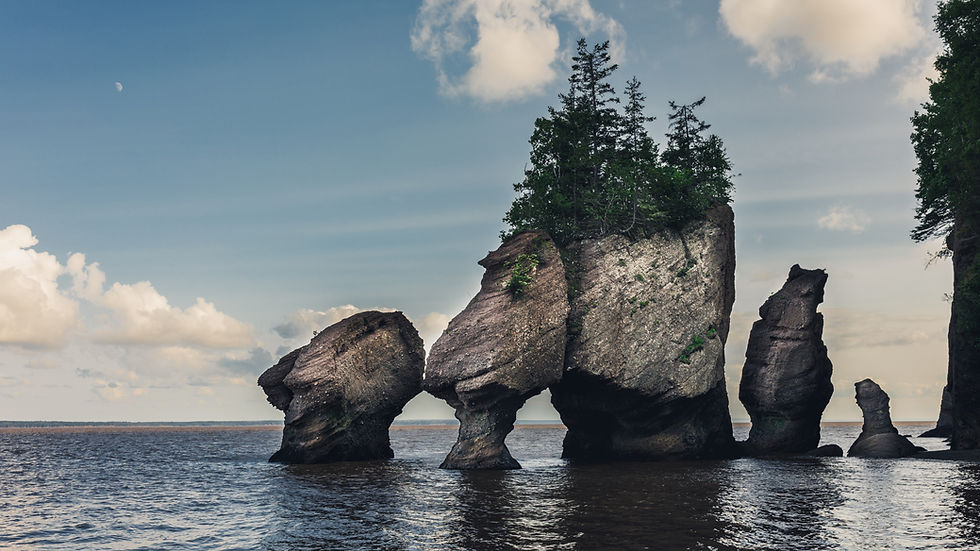
Hopewell Rocks is in New Brunswick and is famous for its enormous tree-topped sea stacks, often called the Flowerpot Rocks. Burntcoat Head Park is on the Nova Scotia side and is known for its exposed ocean floor, tidal pools, red Fundy cliffs and dramatic shoreline.
So which one should you visit?
The answer depends on where you're staying, how much time you have, what you want to see and how you want to experience the tides.
Key Factors in Hopewell Rocks vs Burntcoat Head Park
Location
Hopewell Rocks is located in New Brunswick, Canada, along the Bay of Fundy, while Burntcoat Head Park is situated in Nova Scotia, also along the Bay of Fundy. Both locations are renowned for their impressive tidal ranges.
Tidal Phenomena
Both parks are famous for their extreme tides, but:
Hopewell Rocks: Known for its unique flowerpot rock formations that are visible during low tide.
Burntcoat Head Park: Holds the title for the highest recorded tides in the world.
Accessibility
Accessibility varies between the two parks:
Hopewell Rocks: Offers well-maintained pathways and facilities for visitors, making it more accessible for families and tourists.
Burntcoat Head Park: Provides a more rugged experience, with fewer amenities, appealing to those looking for a more natural setting.
Activities
Visitors can engage in different activities at each location:
Hopewell Rocks: Kayaking, guided tours, and educational programs about the tides and geology.
Burntcoat Head Park: Hiking, photography, and exploring the coastline during low tide.
Visitor Experience
The overall experience can differ significantly:
Hopewell Rocks: More tourist-oriented with facilities like gift shops and cafes.
Burntcoat Head Park: Offers a quieter, more secluded experience, ideal for nature enthusiasts.
Scenic Views
Both parks provide stunning views, but they differ in landscape:
Hopewell Rocks: Features dramatic rock formations and lush surroundings.
Burntcoat Head Park: Showcases rugged cliffs and expansive views of the Bay of Fundy.
Comparing Hopewell Rocks and Burntcoat Head Park
When planning an Atlantic Canada itinerary, travelers often find themselves choosing between two remarkable natural attractions: Hopewell Rocks in New Brunswick and Burntcoat Head Park in Nova Scotia. Each location offers unique experiences and stunning landscapes, making them both worthy of consideration.
Hopewell Rocks
Location: Situated in New Brunswick, along the Bay of Fundy.
Features: Famous for its iconic flowerpot sea stacks, which are best viewed during low tide.
Activities: Visitors can walk on the ocean floor, explore the unique rock formations, and enjoy guided tours.
Best time to visit: Low tide is ideal for experiencing the full beauty of the sea stacks.
Burntcoat Head Park
Location: Located in Nova Scotia, also along the Bay of Fundy.
Features: Home to the world’s highest tides and dramatic cliffs that expose the ocean floor.
Activities: Offers walking trails, interpretive signage, and opportunities for tidepooling.
Best time to visit: Visiting during low tide reveals extensive tidal flats and unique marine life.
Exploring the Tidal Giants: A Deeper Look
When planning an Atlantic Canada itinerary, comparing Hopewell Rocks vs Burntcoat Head Park helps travelers decide between New Brunswick's iconic, tree-topped flowerpot sea stacks and Nova Scotia's dramatic, world-famous exposed ocean floor. While both destinations share the same magnificent body of water and are governed by the phenomenal tidal shifts of the Bay of Fundy, they offer distinctly different experiences, visual landscapes, and emotional connections to nature.
Understanding what makes each location unique ensures that your time spent along the coast matches your travel style, photography goals, and scheduling needs.
The Science and Scale of the Bay of Fundy Tides
Before diving into the specifics of each park, it helps to understand why the Bay of Fundy behaves the way it does. The bay acts like a giant bathtub. Because of its unique shape, length, and depth, water sloshes back and forth in a natural resonance cycle that takes roughly 12 hours and 25 minutes from one high tide to the next.
Billions of tons of water rush in and out twice a day, creating one of the most dynamic marine environments on Earth. Both Hopewell Rocks and Burntcoat Head Park sit within this colossal tidal basin, meaning both experience extreme differences between high and low tide. However, the terrain over which this water flows shapes two completely different visitor experiences.
Hopewell Rocks: Sculptures Carved by Time
Located along the sweeping shores of New Brunswick, Hopewell Rocks is arguably the most internationally recognized symbol of the Bay of Fundy. Over thousands of years, relentless tidal erosion carved out a series of free-standing coastal pillars known locally as sea stacks or "flowerpots." These structures feature narrow bases eroded by the crashing waves, topped with dense layers of trees and greenery that cling stubbornly to the cliff tops.
The Low Tide Experience at Hopewell Rocks
Visiting Hopewell Rocks during low tide is a bucket-list experience for many travelers. Descending the metal staircases or ramps from the interpretive center reveals a vast, reddish-brown ocean floor that feels more like an alien landscape than a Canadian beach. Visitors can walk right up to the towering pillars, look straight up at their carved arches and overhangs, and marvel at the sheer power of water. Interpretive guides are often on-site to explain the geological history and ensure visitors return to the stairs before the rushing tide starts its rapid ascent.
The High Tide Transformation
What makes Hopewell Rocks truly fascinating is the dramatic transformation that occurs just a few hours later. At high tide, the ocean floor where you were just walking is completely submerged. The water rises so high that the massive sea stacks appear as tiny islands or green-topped pillars rising directly out of the ocean. Many travelers choose to book a sea kayaking tour during high tide, allowing them to paddle right around and through the same flowerpot formations they walked beneath earlier in the day.
Burntcoat Head Park: The Realm of the World’s Highest Tides
Crossing the provincial boundary into Nova Scotia brings you to Burntcoat Head Park, a location that holds a prestigious title recognized by the Guinness Book of World Records: the site of the highest recorded tides in the world, measuring an astonishing vertical drop of over 50 feet.
An Immersive Ocean Floor Landscape
While Hopewell Rocks is famous for its distinct, individual monuments, Burntcoat Head Park offers an expansive, sweeping coastal panorama. At low tide, the receding water pulls back over a mile out into the Minas Basin, exposing vast expanses of red mudflats, intricate tidal pools, and exposed marine life. Walking across the ocean floor here feels entirely wild and untamed.
Visitors can explore hidden caves, examine small marine creatures trapped in shallow pools, and gaze up at towering red sedimentary cliffs layered with geological history. A replica lighthouse stands proudly on the cliffs above, adding a classic maritime charm to the landscape.
Comparing Visitor Infrastructure and Accessibility
When deciding between these two destinations, practical considerations such as infrastructure, family-friendliness, and accessibility play a significant role.
Visitor Amenities: Hopewell Rocks operates as a fully developed provincial park with a modern interpretive center, shuttle services for visitors who have difficulty walking long distances, gift shops, restaurants, and multiple well-maintained viewing platforms. It is designed to accommodate large volumes of international tourists comfortably.
Natural Seclusion: Burntcoat Head Park offers a more intimate, community-managed feel. While it features interpretive panels, picnic areas, and walking trails, it retains a rugged, peaceful atmosphere. It is ideal for travelers who prefer a quieter connection with nature away from heavy commercial tourism.
Terrain Considerations: Both locations require a descent down stairs to reach the ocean floor. The terrain at the bottom consists of wet mud, slippery rocks, and uneven surfaces. Sturdy footwear is a must at both parks, and families with young children should supervise closely, as the mud can be quite sticky and deep in certain areas.
Making the Right Choice for Your Itinerary
Choosing between these two natural wonders ultimately comes down to your broader travel route and what kind of memory you want to take home.
If your journey takes you through New Brunswick—perhaps as part of a road trip exploring Moncton, the Acadian Coast, or Fundy National Park—Hopewell Rocks is an absolute must-see. Its iconic flowerpot formations offer some of the most photographed scenery in Canada.
On the other hand, if you are based in Halifax or exploring the scenic shores of Nova Scotia, Burntcoat Head Park fits seamlessly into a regional day trip. It pairs wonderfully with a journey through the nearby Annapolis Valley, known for its vineyards, orchards, and rolling agricultural landscapes.
The Ultimate Travel Recommendation: Savor the Journey
The Bay of Fundy is not a destination meant to be rushed. Too many travelers make the mistake of driving hundreds of miles in a single day just to check off a box on a sightseeing list. The true magic of the Fundy coast lies in observing the rhythm of the water, respecting the power of the tides, and taking the time to appreciate the subtle differences between New Brunswick's sculptural sea stacks and Nova Scotia's majestic tidal flats.
If your schedule and budget allow for it, experiencing both sides of the bay provides a holistic understanding of one of the planet's most remarkable natural phenomena. Whether you choose to walk among the towering flowerpots of Hopewell Rocks or stand in awe of the massive tidal expanse at Burntcoat Head Park, you are guaranteed an unforgettable encounter with the wild spirit of Atlantic Canada.
Hopewell Rocks vs Burntcoat Head Park at a Glance
Feature | Hopewell Rocks | Burntcoat Head Park |
Province | New Brunswick | Nova Scotia |
Main attraction | Sea stacks / Flowerpot Rocks | Ocean floor, cliffs and tidal landscape |
Low tide experience | Walk around sea stacks | Explore exposed ocean floor |
High tide experience | Sea stacks surrounded by water | Returning tide and coastal views |
Best for | Iconic rock formations | Tidal landscape and exploration |
From Halifax | Longer cross-provincial journey | More natural fit for Halifax itineraries |
Photography | Sea stacks | Cliffs, ocean floor, tidal pools |
Tide planning | Essential | Essential |
Hopewell Rocks officially describes more than twenty free-standing sea stacks along approximately two kilometres of shoreline and provides tide information to help visitors determine safe ocean-floor access.
Burntcoat Head Park is promoted by Tourism Nova Scotia for exploring the ocean floor, tide pools and Fundy cliffs at low tide.
What Makes Hopewell Rocks Different?
The first thing you'll notice at Hopewell Rocks is the shape of the landscape.
The famous formations rise from the shoreline like giant natural sculptures.
At low tide, you walk among them.
At high tide, the water surrounds their bases.
That's why the experience can feel almost like visiting two different attractions.
Tourism New Brunswick describes the formations as sea stacks or “flowerpots,” created by thousands of years of tidal erosion.
The park also has walking trails, viewing areas, interpretive facilities and ocean-floor access.
One of the best things about Hopewell Rocks is the visual contrast.
Low tide: You are looking up at the rocks.
High tide: The rocks appear to rise directly from the water.
The park itself recommends checking tide tables and notes that visitors may want to experience both high and low tide.
What Makes Burntcoat Head Park Different?
Burntcoat Head Park feels less like a collection of individual rock monuments and more like an enormous changing coastal landscape.
At low tide, the shoreline opens.
You can explore tidal pools, exposed ocean floor and the red Fundy cliffs.
Tourism Nova Scotia identifies Burntcoat Head Park as the location of the world's highest recorded tides and encourages visitors to experience both low and high tide where possible.
There's also a lighthouse, trails, picnic areas and interpretive displays.
The experience is particularly appealing if you enjoy:
Coastal photography
Geology
Tidal landscapes
Walking
Quiet exploration
Nature-focused travel
Which One Is Better for Photography?
There's no single answer because the photographs are different.
Choose Hopewell Rocks if you want:
Dramatic sea stacks
Tree-covered rock formations
Iconic Fundy photographs
People walking between giant formations
High-tide photographs showing water around the rocks
Choose Burntcoat Head Park if you want:
Wide coastal landscapes
Red Fundy cliffs
Exposed ocean floor
Tidal pools
Lighthouse views
Changing shoreline scenes
If you're building a photography itinerary, tide timing matters more than simply arriving at the attraction.
Which One Is Better for Families?
Both can work for families, but the experience is different.
Hopewell Rocks has developed visitor infrastructure, trails and multiple ways to reach the ocean floor. Its official information describes accessible trails and several ocean-floor access points, while also warning that some shoreline sections can be slippery.
Burntcoat Head Park offers trails, picnic areas and viewpoints, while the exposed ocean floor provides an unusual educational experience for children.
The important point is to consider the actual terrain. An ocean-floor experience is not the same as walking on a paved sidewalk.
Which One Is Easier From Halifax?
If you're staying in Halifax and have only one day, Burntcoat Head Park naturally fits a Nova Scotia itinerary more easily.
That doesn't mean Hopewell Rocks isn't worth visiting.
It means Hopewell Rocks makes more sense when New Brunswick is already part of your trip.
For example:
Halifax → Burntcoat Head Park → Annapolis Valley → Halifax
is a different style of day from:
Halifax → New Brunswick → Hopewell Rocks → New Brunswick/Fundy coast
The second involves crossing provincial boundaries and requires more careful itinerary planning.
If you're already travelling through New Brunswick, Hopewell Rocks can become a natural stop on your Fundy journey.
What About Seeing Both?
If you have enough time, seeing both can be fascinating.
You're essentially experiencing two different expressions of the same enormous tidal system.
Burntcoat shows you the Nova Scotia side.
Hopewell Rocks gives you the iconic New Brunswick sea-stack landscape.
But don't force both into a single rushed day. The Bay of Fundy rewards slower travel.
A better itinerary may be:
Day 1: Halifax and Nova Scotia
Day 2: Burntcoat / Fundy region
Day 3: Cross into New Brunswick
Day 4: Hopewell Rocks and Fundy coast
The exact route depends on your dates and other destinations.
A Local's Secret: Don't Compare Them Only by Tide Height
Here's the mistake I see travelers make when planning Fundy experiences.
They ask:
“Which place has the bigger tide?”
That's not the most useful question.
Instead ask:
“What do I want to experience when the tide changes?”
If your answer is:
“I want to walk among giant sea stacks.”
Look closely at Hopewell Rocks.
If your answer is:
“I want to explore a huge exposed ocean-floor landscape.”
Look closely at Burntcoat Head Park.
If your answer is:
“I want to understand the Bay of Fundy as a whole.”
Consider visiting both sides during a longer trip.
What Should You Choose?
Choose Hopewell Rocks if:
You're travelling through New Brunswick.
You want the famous Flowerpot/sea-stack formations.
You want to see the rocks at both low and high tide.
You have time for a New Brunswick Fundy itinerary.
Choose Burntcoat Head Park if:
You're staying in Halifax.
You're exploring Nova Scotia.
You want exposed ocean floor and tidal pools.
You want to combine Fundy with Annapolis Valley experiences.
Consider both if:
You're taking a longer Atlantic Canada road trip.
You want to experience both sides of the Fundy coastline.
You have enough time to avoid rushing between destinations.
Can Safi Seaside Tours Help Plan a Fundy Experience?
Yes!
For travelers staying in Halifax, a private itinerary can be built around the tide rather than forcing the tide into a fixed sightseeing schedule.
Depending on your travel date, your day could include:
Burntcoat Head Park
Fundy coastal scenery
Annapolis Valley
Local food experiences
Tidal bore experiences
Other Nova Scotia attractions
If New Brunswick is part of your larger Atlantic Canada journey, we can also help you think through how the Fundy coast fits into your route.
Explore our Nova Scotia tours from Halifax for additional ideas.
Final Thoughts
Hopewell Rocks and Burntcoat Head Park aren't really competing attractions.
They're two different ways to experience one remarkable natural system.
One gives you enormous sea stacks.
The other gives you exposed ocean floor, tidal pools and Fundy cliffs.
The right choice depends on your route and the experience you want.
And if you have enough time?
Seeing both can give you a much deeper appreciation of what makes the Bay of Fundy so unusual.
Ready to plan your Fundy experience from Halifax?
Safi Seaside ToursHalifax, Nova Scotia
+1 (902) 402-7263


Comments